UR-PHOTOGRAPHY
Practicing Authenticity

Being authentic is an intense endeavor. The fear of facing what is authentic might lead to utter denial, a pattern I observe in behaviors of blind conformity and blind anti-conformity. Conversely, authenticity brings balance and defense against alienation from reality. How? By practicing free will; by choosing while listening to our own conscience and by accepting consequences within a real environment, one we cannot control.
The quest for an authentic life has been opposed, throughout history, by dominators, demagogues, and manipulators. In current times, we are all facing virtual systems. From virtual relationships to virtual education, machines lure us with tailored illusions promising a life wiped out of the hardship of decision-making. Propaganda hides the deception that is taking place. By clicking what seems "convenient," "free," and "easy" we slowly relinquish the skills that allow us to take real decisions: our empathy, our discernment, our grit and perseverance. Rest assured, the glitz of the virtual world is nothing but a decoy; the true agenda is the manipulation of human perception and attention. The outcome is the booming materialistic philosophy that denies the very existence of conscience, of free will, and the point of being authentic. This recurring force sees humans as egotistical machines and aims at the mutation of mankind. Such ideology can be confuted once we grasp that our nature is not algorithmic. The only way we can survive this epic battle is by engaging our own identity, everyday. Practicing an authentic life shields us from technocratic chimeras and uncovers bliss in what is unique and in union with the rest of reality.
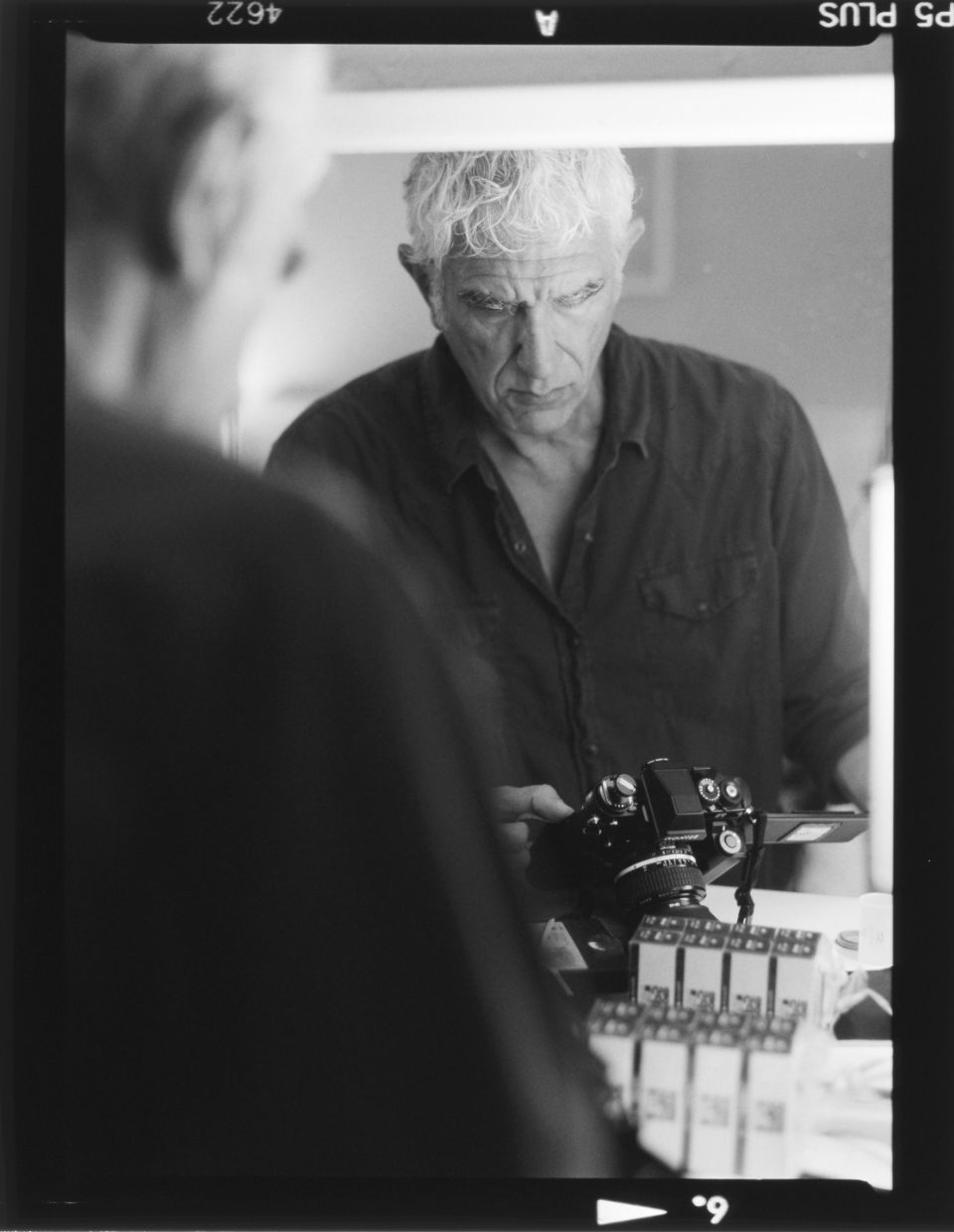
Since its invention, the term 'photography' has been morphed into a vague entity, so I define ur-photography the practice of documenting by using photographic film (silver halide emulsion) void of any retouching, chemical or digital. In other words, as I expressed in my criterion page, when I photograph:
I capture what LIGHT and SILVER generate, right in the moment I SEE. I do not fabricate images. I exhibit what I captured.
Nothing Virtual
No Retouching
No Digital Photos
No Film Recording
No Artificial Intelligence
Now, how can ur-photography help in the quest for authenticity? Ur-photography might sound like an outlandish choice compared to established philosophical and psychological investigations, but each method should be considered for its unique opportunity and its boundaries (from this point, I'll use the generic terms 'photography' and 'photograph' equivalent to 'ur-photography' and 'ur-photograph'). Liberated from its long history of misconceptions and of chemical and digital manipulations, photography has a unique strength at its core. The core photographic act, the genesis of each photograph, needs interaction among real elements: our environment, light, matter, and our awareness. What is fundamental here is to grasp that this rich interaction happens in one moment. There is no rewind button. Photography adheres to time.
Unlike introspection, ur-photography can’t rely only on our own imagination and past experiences. We can imagine our ideal love, remember love in our past and the one that we will meet, but we can only photograph the one in front of us. Then, there, in the moment we release the shutter, we seal our decision-making; we capture a fragment of our life in the form of exposed emulsion. This is a unique historical document; its inestimable value is existential. On this account, by choosing to photograph we acknowledge that we need to make contact with another nature to reveal our own. Authenticity has ground to grow.
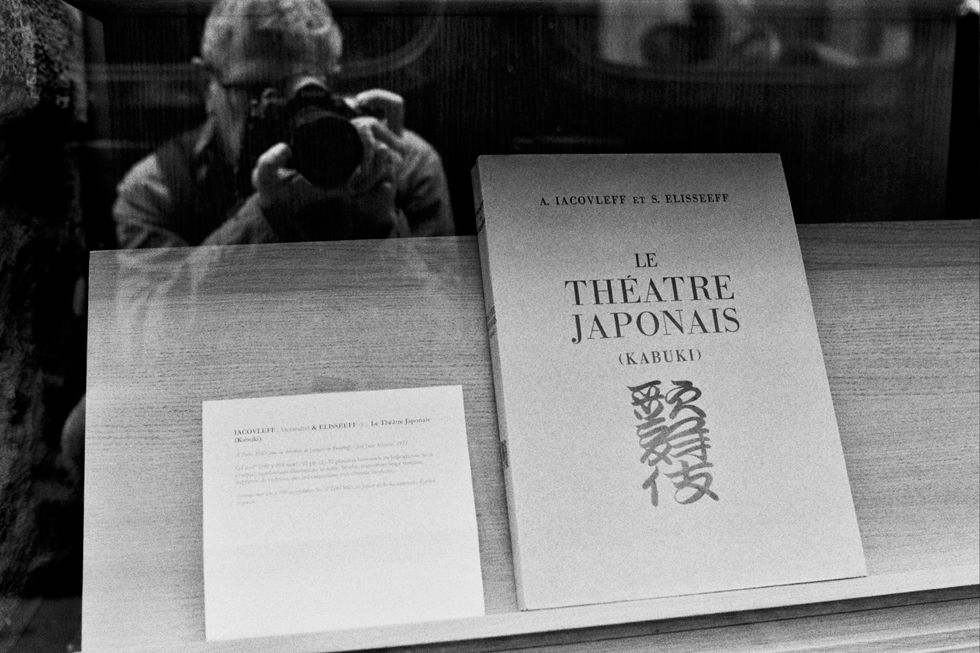
All this has to happen in the field. An authentic photographic act needs the practice of freedom. Rationality alone is not sufficient to earn this awareness and liberate ourselves from toxic habits. Freedom happens by understanding our boundaries while we explore what is real. Freedom is NOT expecting to achieve whatever we desire. Contrary to popular slogans, we cannot become 'whatever we want,' but we can experience freedom by learning who we are. On this account, ur-photography is an exploration of freedom.
The practice of ur-photography means challenging our relationship with reality. It means coming to terms with what we can control and what we cannot. It is a hard task, dense with prejudices and conventions to dismantle, but it will help us unveiling common illusions and defending ourselves from phenomena like: social media addiction, pathological narcissism, body dysmorphia, video gaming addiction, loss of motivation, shopping addictions, low and excessive self-esteem, stress from decision-making and visual noise.
My practice is not intended only as a form of defense for mental balance. I believe it can be a precious tool for those who are interested in challenging and developing their creative talents. Certainly, I will not reveal how to achieve “amazing photos;” there is no such thing. Indeed, I can help you, as a sparring partner, finding and refining your own photography.
Arendt, Hannah. The Human Condition. The University of Chicago Press, Second Edition, 2018.
Barthes, Roland. Camera Lucida. New York: Hill and Wang, 1981.
Barzun, Jacques. Clio and the Doctors. The University of Chicago Press, 1974.
Bernays, Edward. Propaganda (1928, Renewed 1955). Desert Books.
Blackmore, Susan. Conversation on Consciousness. New York: Oxford University Press, 2006.
Camus, Albert. L’homme révolté. Gallimard, 1951.
Cartier Bresson, Henri. The Decisive Moment. New York: Simon & Schuster, 1952.
Frankfurt, Harry G. On Bullshit. Princeton University Press, 2005.
Holt, Jim. When Einstein Walked with Gödel - Excursions to the Edge of Thought. Farrar, Straus & Giroux, 2018.
Hoover, Stewart V. and Perry, Ronald F. Simulation, A Problem-Solving Approach. Addison-Wesley, 1989.
Johnson, Paul. Art: A New History. New York: Harper Collins, 2003.
Meagher, Robert E. Albert Camus and the Human Crisis. New York: Pegasus Books, Ltd., 2021.
Mitchell, William J. The Reconfigured Eye: Visual Truth in the Post-Photographic Era. MIT Press, 1992.
McCullin, Don. Unreasonable Behaviour. New York: Alfred A. Knopf, Inc., 1992.
Mulas, Ugo. La Fotografia. Torino: Einaudi, 1973.
Newhall, Beaumont. The History of Photography. New York: The Museum of Modern Art, 1982.
Orwell, George. 1984. Hartcourt Inc., 1949.
Orwell, George. 1984. With an Afterword by Erich Fromm. Signet Classics, 1964.
Packard, Vance. The People Shapers. Little Brown & Co, 1977.
Pearl, Judea and Mackenzie, Dana. The Book of Why: The New Science of Cause and Effect. Basic Books, 2018.
Penrose, R. The Emperor’s New Mind: Concerning Computers, Minds, and the Laws of Physics. Oxford: Oxford University Press, 1989.
Ricks, Thomas. Churchill & Orwell, The Fight for Freedom. Penguin Books, 2017.
Robinson, H. Objections to Physicalism. New York: Oxford University Press, 1993.
Robinson, Daniel N. Toward a Science of Human Nature. New York: Columbia University Press, 1982.
Robinson, Daniel N. An Intellectual History of Psychology. The University of Wisconsin Press, 1982.
Sciascia, Leonardo. Il giorno della civetta. Einaudi, 1961.
Searle, J. R. The Rediscovery of the Mind. Cambridge: MIT Press, 1992.
Simenon, George. Mémoires intimes. Presses de la Cité, 1981.
Singh, Simon. The Code Book. New York: Anchor Books, 2000.
Trachtenberg, Alan. Classic Essays on Photography. New Haven: Leete's Island Books, 1980.
Il Generale Della Rovere, by Roberto Rossellini. © 1959, Zebra Film.
Contempt, by Jean-Luc Godard. © 1963, StudioCanal Image/Compagnia Cinematografica Champion.
Blow-Up, by Michelangelo Antonioni. © 1966, Turner Entertainment.
The Battle of Algiers, by Gillo Pontecorvo. © 1966, Casbah Films.
Day for Night, by Francois Truffaut. © 1973, Les Films du Carrosse.
The French Lieutenant's Woman, by Karel Reisz. © 1981, Juniper Films.
War Photographer, by Christian Frei. © 2001, First Run Features.
William Eggleston Photographer by Reiner Holzemer. © 2008, Reiner Holzemer Film.
For example: in the morning, going to the set. I don't usually have clear ideas; I prefer getting there and finding that I have to resolve a certain situation, and then doing it in the way it feels, starting from a virginal point. [...]. What's important is who I am in the moment of shooting. That's where it becomes "autobiographical."
On the other hand, the past is a cadaver. Experience is a limited tool only. Also, it can make you sterile or distract you. I really believe that one must annihilate experience. Get free of it. Otherwise it lures you, ties your hands, makes you a victim of false promises. It robes you of that instinctiveness (sic) which to me is the most beautiful thing in human behavior.
Michelangelo Antonioni, A Love of Today: An Interview with Michelangelo Antonioni, by Gideon Bachman
Such are the two ways of the Photograph. The choice is mine: to subject its spectacle to the civilized code of perfect illusions, or to confront in it the wakening of intractable reality.
Roland Barthes, Camera Lucida
It can never be the same, playing with blanks.
James Bond, from Irvin Kershner's Never Say Never Again
Man is the only creature who refuses to be what he is.
By the treatment that the artist imposes on reality, he declares the intensity of his rejection.
Whether it succumbs to the intoxication of abstraction and formal obscurantism, or whether it falls back on the whip of the crudest and most ingenious realism, modern art, in its semi-totality, is an art of tyrants and slaves, not of creators.
Albert Camus, The Rebel
There is a computer disease that anybody who works with computers knows about. It's a very serious disease and interferes completely with the work. The trouble with computers is that you 'play' with them.
Richard Feynman
It is just this lack of connection to a concern with truth--this indifference to how things really are--that I regard as of the essence of bullshit.
Harry G. Frankfurt, On Bullshit
It has become fashionable in recent decades, not least among people who think of themselves as on the left, to deny that objective reality is accessible, since what we call 'facts' exist only as a function of prior concepts and problems formulated in terms of these. [...]. Any tendency to doubt this is 'positivism', and no term indicates a more comprehensive dismissal than this, unless it is empiricism. In short, I believe that without the distinction between what is and what is not so, there can be no history. Rome defeated Carthage in the Punic Wars, not the other way around. How we assemble and interpret our chosen sample of verifiable data [...] is another matter.
Eric Hobsbawm, On History
I think this is the age of fanaticism, in a way; I think fanaticism feeds upon itself and I loathe fanatics.
Robert Ludlum
L'art n'est que doute.
Jean-Rene Methout
Nothing has been retouched, nothing electronically altered. I photographed what I saw.
Helmut Newton
Ever bought a fake picture? [...]. The more you pay for it, the less inclined you are to doubt it.
George Smiley, from John Le Carré's Tinker, Tailor, Soldier, Spy
No one questioned the appropriateness of calling the photograph a "picture."
Alan Trachtenberg, Classic Essays on Photography
Photography is a love affair with life.
Burk Uzzle, cited in Creative Camera International Year Book 1976